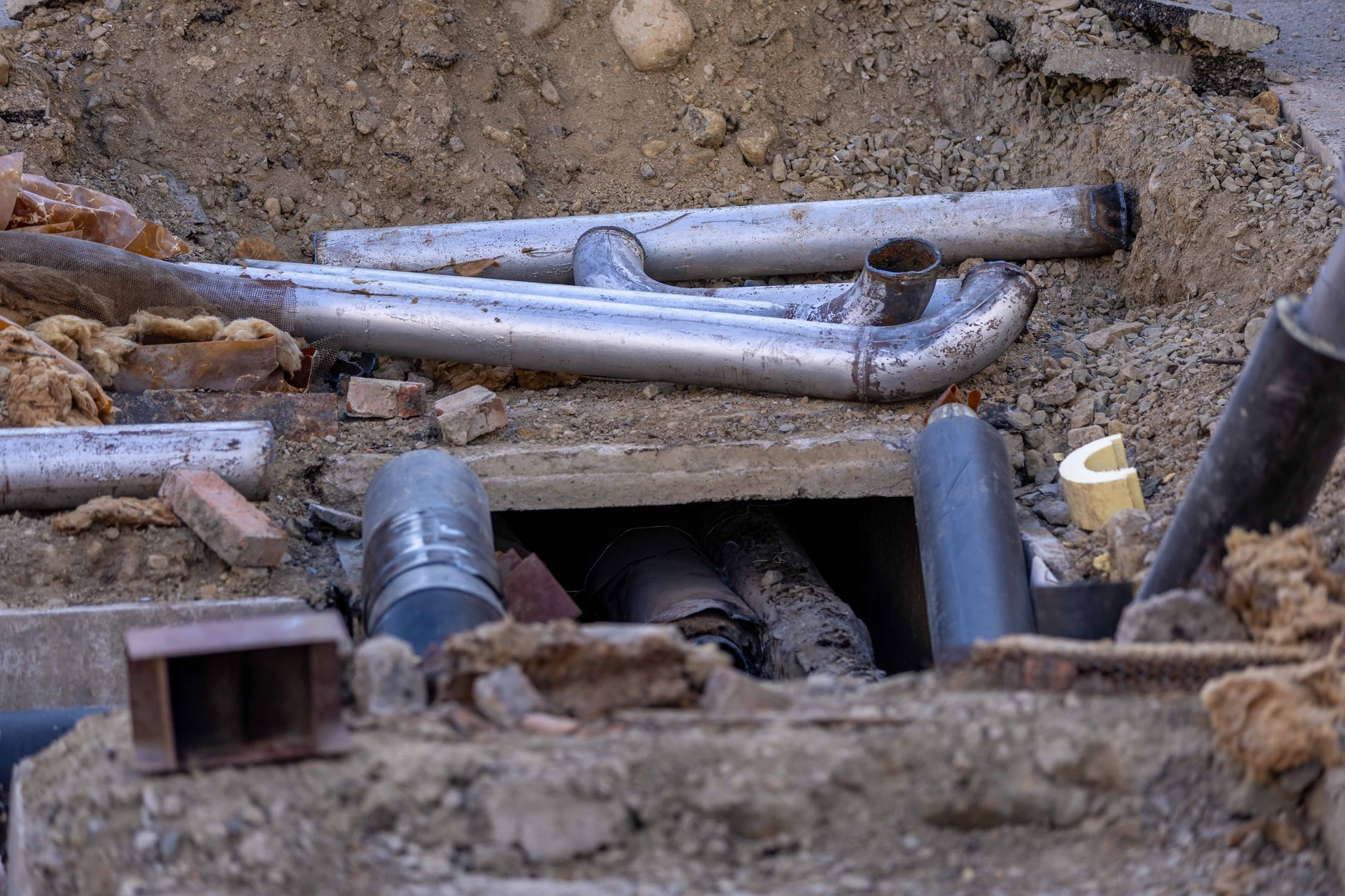
Galvanized Pipe Repipe vs. Spot Repair: Which Is Right for South Bay Homes?
By Stephens Plumbing10 min read
For most South Bay homes built before 1980 with original galvanized pipes, a full repipe is the better long-term investment. This applies when pipes exceed 40 years of age. It also applies when they show widespread corrosion. Spot repairs make sense only for isolated damage on an otherwise healthy system. A licensed plumber's inspection determines which path fits your situation.
What Is the Real Difference Between a Full Repipe and Spot Repairs?
A full repipe replaces every galvanized supply line throughout the home, typically substituting copper or PEX tubing for the original iron-based pipe network. Spot repairs, by contrast, target a single failed or leaking section while leaving the rest of the aging system intact. The distinction matters enormously in South Bay communities. Torrance, Redondo Beach, and Carson have homes built between 1950 and 1975. These homes commonly carry original galvanized plumbing now 50 to 75 years old. Galvanized pipe corrodes from the inside out. A visible leak is rarely an isolated event. It is usually a late-stage symptom of a system-wide problem that has been building for years, affecting water pressure, water quality, insurance eligibility, and long-term maintenance budgets.
How Does Galvanized Pipe Corrosion Progress Over Time?
Galvanized steel pipes are coated with zinc to resist rust, but that zinc layer erodes gradually when exposed to water and oxygen. Once the zinc is gone, iron is exposed directly to the water supply, and rust begins accumulating inside the pipe walls. This internal buildup narrows the pipe diameter over time. Older South Bay homes often experience noticeably low water pressure. This happens even when the municipal supply is normal. Rust sediment also discolors tap water, producing a brownish or reddish tint that is a common complaint in neighborhoods with the original plumbing. Under normal operating conditions, galvanized pipes have a lifespan of 40 to 70 years (tuspipe.com), but pipes installed in the 1960s may hit functional failure at just 40 to 50 years. Once corrosion is widespread, patching one section leaves the same degraded pipe network in place everywhere else.
What Materials Replace Galvanized Pipes in a Modern Repipe?
Copper remains the traditional repipe material, prized for its durability, compatibility with California's variable water chemistry, and decades-long track record in residential plumbing. PEX, or cross-linked polyethylene, has become the dominant choice for cost-conscious projects. PEX-A requires 30 to 50% fewer fittings than copper, which directly cuts labor hours and reduces potential leak points inside walls (geekpoweredstudios.com). PEX pipes can last 30 to 50 years depending on water conditions and maintenance, while copper routinely exceeds 50 years with proper care. CPVC is a third option but is less common in Southern California repipe projects. At Stephens Plumbing, we recommend copper or PEX based on each home's layout, budget, and the specific water conditions in that South Bay neighborhood.
How Do Costs Compare Between Repiping and Spot Repairs?
This is where the decision often comes into focus. Spot repairs typically run $150 to $700 per section depending on access difficulty, pipe location, and whether drywall removal is required (tuspipe.com). A whole-home repipe for a single-family South Bay residence generally ranges from $4,000 to $15,000, with a national average near $7,500 (geekpoweredstudios.com). On a per-square-foot basis, PEX-A installation runs $3.50 to $7.00 per square foot while copper runs $8.00 to $14.00 per square foot (geekpoweredstudios.com). A full copper repipe for a standard home averages $8,000 to $15,000, while a PEX repipe typically ranges from $4,000 to $8,000. The upfront gap is real. But so is the math on repeat repairs.
Consider a concrete scenario: a Torrance homeowner with a 1962 three-bedroom home has two leaks repaired in 2023 at $450 each (tuspipe.com). In 2024, a third leak appears in a different wall, costing $600 including drywall access (tuspipe.com). Two more repairs follow over 18 months at $500 each (tuspipe.com). That is $2,500 spent without touching the underlying corrosion, and the pipe system is now two years older and more fragile (tuspipe.com). The repair cycle is not just expensive. It is demoralizing.
What Hidden Costs Should South Bay Homeowners Anticipate?
Both options carry costs that do not appear in the headline estimate. Wall patching and drywall repair after pipe access adds $500 to $2,000 to a project total depending on scope (tuspipe.com). Permit fees required by Los Angeles County and South Bay municipalities typically add $200 to $600 (tuspipe.com). These permits are required for full repipe projects in most South Bay cities and are non-negotiable for code compliance. The bigger hidden cost is inaction: water damage remediation from a delayed or inadequate repair can reach $3,000 to $10,000 or more depending on how long moisture has been accumulating inside walls or under flooring (tuspipe.com). Occupied homes undergoing repipe work may also incur 10 to 20% additional labor costs due to protective staging measures (countbricks.com). Copper piping raises the baseline repipe cost by another 30 to 50 percent over PEX due to material and labor differences (neighborjoe.com).
Spot Repair vs. Full Repipe: Pros and Cons for South Bay Properties
Neither option is universally right. The correct choice depends on the age of the existing system, the extent of corrosion, the homeowner's timeline, and the financial picture. South Bay's older housing stock, combined with the mineral content in Southern California municipal water, generally tilts the analysis toward full repiping for any system over 40 years old. Hard water accelerates zinc coating erosion, which means South Bay galvanized pipes may reach the lower end of the 40 to 70 year lifespan range faster than pipes in milder water environments (tuspipe.com). The pros and cons below reflect that local reality.
Spot Repair Pros:
- Low upfront cost ($150 to $700 per section)
- Minimal disruption, typically completed in hours
- Appropriate for isolated, non-corrosion damage on newer systems (tuspipe.com)
Spot Repair Cons:
- Leaves corroded pipe in place throughout the home
- May raise red flags with homeowners insurance carriers
- Does not restore water pressure or eliminate rust in tap water
- Creates a repair cycle that accumulates cost without solving the problem
Full Repipe Pros:
- Resolves system-wide corrosion in a single project
- Significant improvement in water pressure and water quality
- Increases property value and improves insurability
- New pipe systems (copper or PEX) carry decades of useful life
When Does a Spot Repair Actually Make Sense?
Spot repair is a defensible choice in specific situations. If the pipe system is newer or was partially replaced within the last 15 to 20 years, the case for a full repipe weakens considerably. Spot repair also makes sense when damage results from a single mechanical event, such as a nail puncture or fitting failure, rather than corrosion. A professional plumbing inspection that confirms the rest of the system is structurally sound and free of widespread rust provides the green light. Severe budget constraints combined with a firm plan to complete a full repipe within 12 to 24 months can also justify a temporary spot fix. The key word is temporary.
When Is a Full Repipe the Clearer Choice?
The case for a full repipe becomes clear under several conditions. A South Bay home built before 1980 that still carries original galvanized supply lines is almost certainly past the practical repair threshold. Multiple leaks in different locations within a two-year window signal system-wide corrosion, not localized problems. Water tests showing rust, sediment, or lead contamination linked to pipe degradation confirm what visual inspection suspects. A planned kitchen or bathroom remodel is the optimal time to repipe because walls are already open, eliminating a major portion of labor costs. Results speak louder than estimates when you see the water run clear for the first time after decades.
Comparison Table: Galvanized Pipe Repipe vs. Spot Repair
The table below reflects typical Southern California project parameters as of 2025. Use it as a quick reference when comparing your options side by side.
| Factor | Spot Repair | Full Repipe (Copper or PEX) |
|---|---|---|
| Typical Cost | $150 to $700 per section | $4,000 to $15,000 whole house |
| Project Duration | A few hours to 1 day | 2 to 5 days |
| Addresses Root Cause? | No, treats symptom only | Yes, removes all corroded pipe |
| Water Pressure Improvement | Minimal to none | Significant, often dramatic |
| Water Quality Improvement | None | Eliminates rust and sediment at source |
| Expected Lifespan After Work | 1 to 5 years (system still aging) | 50+ years (copper) / 30 to 50 years (PEX) |
| Permit Required? | Usually not | Yes, in most South Bay cities |
| Insurance Impact | May raise red flags with insurer | Often improves insurability |
| Best For | Isolated, non-corrosion damage on newer systems | Pre-1980 homes with widespread corrosion |
| Financing Available? | Rarely needed | Yes, including 0% options |
What Should South Bay Homeowners Do Next?
The first step is a professional plumbing inspection before committing to either option. Camera inspection and pressure testing allow a licensed plumber to assess system-wide corrosion levels rather than relying on visible symptoms alone. This data removes guesswork from the decision. Verify that any contractor you consider holds a valid California State License Board C-36 plumbing license before signing any agreement. Unlicensed work voids permits and can create liability issues when you sell the property. Our team at Stephens Plumbing has served South Bay and Long Beach homeowners since 1986, and we offer same-day inspections for homeowners who need a fast, accurate assessment without pressure to commit on the spot.
Once you have inspection results, ask for a written estimate that itemizes permits, wall patching, cleanup, and material costs. Permits through your city or Los Angeles County are required for repipe work in most jurisdictions and protect you legally. If upfront cost is the barrier, ask specifically about 0% financing, which can spread a $7,000 to $10,000 repipe over manageable monthly payments without interest accumulation (tuspipe.com). Galvanized pipe replacement is not an emergency until it is, and waiting for the next leak to force the decision is rarely the cheaper path.
What Questions Should You Ask a Plumber Before Committing?
Before signing any agreement for either a spot repair or a whole-house repipe, ask the plumber to answer these questions in writing. First, how much of the existing pipe system shows active corrosion or reduced diameter based on camera inspection? Second, what pipe material do you recommend for this home's layout and South Bay water chemistry, and why? Third, does the estimate include permits, wall patching, and cleanup, or will those appear as separate charges? Fourth, what warranty do you offer on both materials and labor? Reputable South Bay plumbers stand behind their repipe work with multi-year warranties. If a contractor cannot answer these questions clearly, keep looking.
Frequently Asked Questions
How do I know if my South Bay home's galvanized pipes need a full repipe or just a spot repair?
If your home was built before 1980 and retains original galvanized plumbing, a full repipe is almost always the right call. Signs include multiple leaks in different locations, low water pressure throughout the house, rusty or discolored tap water, and a pipe system that is 40 to 50 years old or older. A camera inspection confirms system-wide corrosion.
How long does a whole-house repipe take in a typical South Bay home?
Most whole-house repiping projects in South Bay take 2 to 5 days depending on home size, layout complexity, and pipe material chosen. PEX installs faster than copper due to fewer fittings and its flexibility around corners. Water is shut off during active work but restored daily when possible. Drywall patching follows after inspection.
Will replacing galvanized pipes increase my home's value or help it sell faster?
Yes. Updated plumbing is a meaningful selling point in South Bay's competitive real estate market. Buyers and their inspectors flag original galvanized pipes as a known liability. A documented whole-house repipe using copper or PEX removes that flag, can improve insurance eligibility, and gives buyers confidence in the property's infrastructure condition.
Does homeowners insurance cover galvanized pipe damage or replacement in California?
Most California homeowners insurance policies cover sudden water damage from a pipe failure but exclude gradual corrosion damage or the pipe replacement itself. Repeated galvanized pipe claims can raise premiums or trigger coverage denial. Completing a full repipe often improves your insurability and may qualify you for lower rates with some carriers.
What is the difference between copper and PEX for a repipe, and which is better for South Bay water?
Copper costs $8.00 to $14.00 per square foot installed and lasts 50 or more years. PEX costs $3.50 to $7.00 per square foot, lasts 30 to 50 years, and requires 30 to 50% fewer fittings, reducing labor time and leak points. Both work well in South Bay. PEX is the more budget-friendly option; copper is preferred for maximum longevity and resale appeal.
What are the signs spot repairs won't be enough?
Spot repairs are insufficient when leaks appear in multiple locations over a short period, when water pressure remains low throughout the house even after a repair, when tap water runs rusty or brown, or when the pipe system is over 40 years old. These patterns indicate system-wide corrosion that no single spot repair can address permanently.
How much does whole-house repiping cost in South Bay?
A whole-house repipe in South Bay typically ranges from $4,000 to $15,000, with a national average near $7,500 for single-family homes. PEX repiping runs $4,000 to $8,000 for most homes; copper runs $8,000 to $15,000. Add $200 to $600 for permits and $500 to $2,000 for drywall repair depending on access requirements.
Are galvanized pipe replacements common in the South Bay?
Yes. Torrance, Redondo Beach, and other South Bay communities have a significant housing stock from the 1950s through 1970s that used galvanized steel supply lines as the standard material. Many of those systems are now 50 to 75 years old and past their practical service life. Galvanized pipe replacement is one of the most frequently requested repipe services throughout California's older urban neighborhoods.
How long do spot repairs usually last on old galvanized pipes?
On galvanized pipe systems over 40 years old, spot repairs typically last only 1 to 5 years before corrosion causes another failure nearby. The repaired section may hold, but the surrounding pipe continues degrading. Most homeowners who choose repeated spot repairs find themselves scheduling another repair within 12 to 24 months at a different location in the same system.
Sources & References
About the Author
Stephens Plumbing
Stephens Plumbing is a family-owned HVAC and plumbing company serving South Bay, Long Beach, and Orange County since 1986, offering same-day and 24/7 emergency services.
Related Posts
Ductless Mini Split vs. Central AC: Cost and Performance Comparison for Homes Without Ductwork
Choosing between a ductless mini split and central AC is one of the biggest HVAC decisions Orange County homeowners face, especially in older homes built without ductwork. This comparison breaks down upfront costs, energy efficiency, installation complexity, and long-term value to help you make a confident choice.
9 min read
Slab Leak Repair Costs in Torrance and Redondo Beach: What Homeowners Should Expect
Slab leak repair in Torrance and Redondo Beach typically costs between $500 and $10,000 or more, depending on the repair method and leak location. Older South Bay homes built in the 1950s-1970s face the highest risk due to corroded copper or galvanized pipes under the foundation. This guide breaks down every cost factor so you can make an informed decision.
11 min read